


Varieties of the D.O. Navarra
In Navarra there is a wide range of white and red varieties that are used to produce wines of all styles adapted to the tastes of consumers.
Red varieties
White varieties
Roots and Flavors
of the Vine
More than 70% of the vineyard is occupied by native varieties (Garnacha, Tempranillo...), while the remaining 30% is made up of the most famous international varieties (Cabernet Sauvignon, Chardonnay...).
In total, 77% of the grapes produced in Navarre are red, and 23% are white.
Red Wine Grape Varieties
The Grenache, the predominant and most emblematic variety of the D.O. Navarra, occupies a prominent place in the vineyard, followed by the Tempranillo. Together, both varieties add up to more than half of the total vineyard area from the Navarra Designation of Origin.
White Grape Varieties
The Chardonnay is the most representative white variety of the D.O. Navarra and gives rise to elegant wines of great recognition in the market, both young and barrel-fermented.
Red Grenache
Red grape variety of Spanish origin, which during the last century was the majority grape in the Iberian Peninsula. Garnacha is very widespread in Spain, where it has been given several names, such as: "Garnacho tinto", "tinto aragonés", "alicante", "navarra", "garnatxa"... and in other countries it is known as "grenache", "roussillon rouge", "granaccia", "uva di Spagne", "cannonau"...
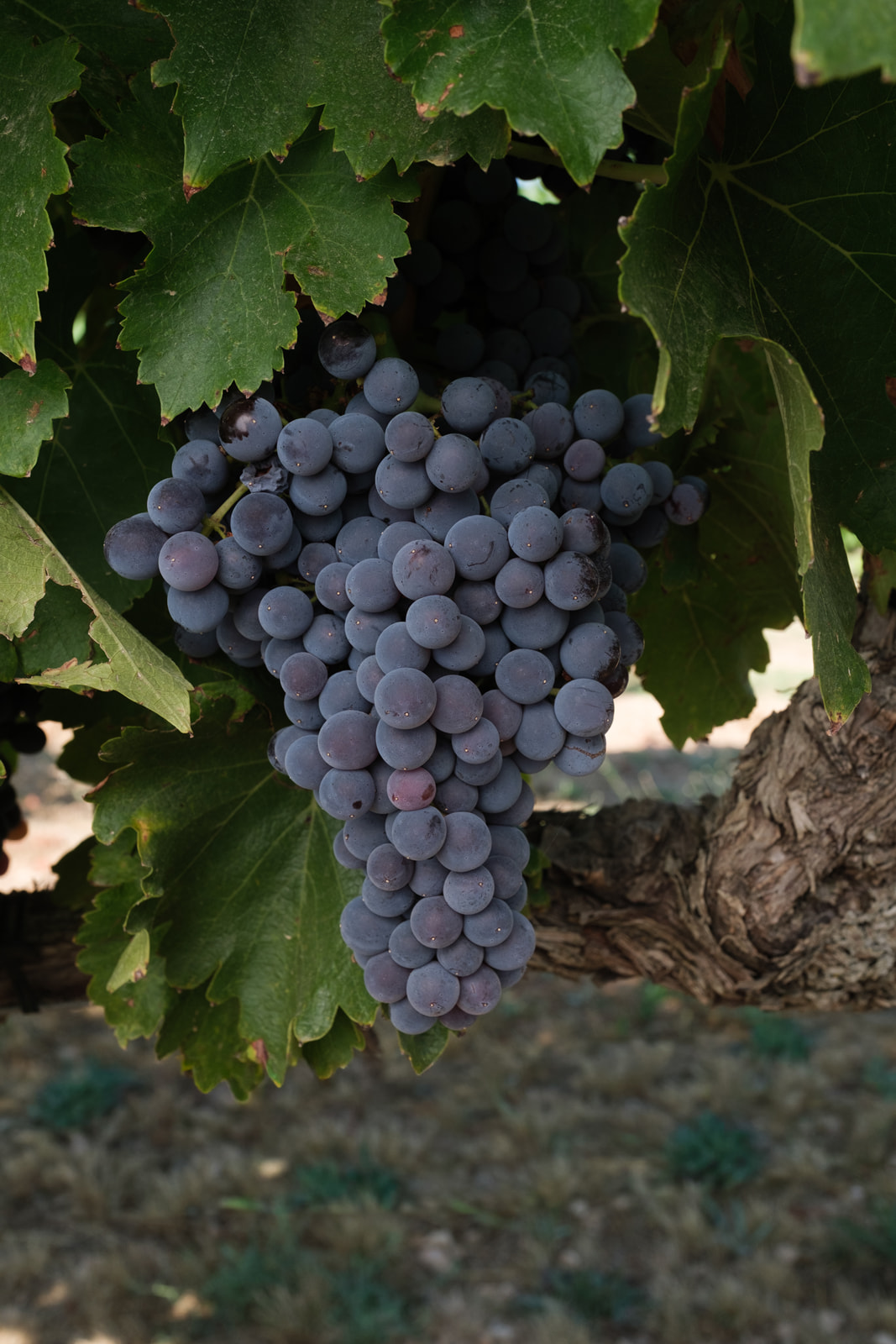
It seems that the origin of the Grenache is located in Alicante, from where it would have spread throughout the rest of Spain and penetrated into France and Italy, reaching Navarra from Aragon. In recent decades it has also been exported to other continents such as Australia, where it is enjoying a good moment.
In Navarra it was historically very well established (it represented almost 90% of the vineyards at the end of the 1970s) but gradually lost ground due to the introduction of new varieties. Today it is still important, together with Tempranillo it represents more than 50% of the vineyards in Navarra and occupies the second place in terms of planted area. Although it is grown in all areas, it has a greater presence in Baja Montaña and Ribera Baja.
This variety produces wines with high alcohol content, good acidity, medium body and aromatic. In Navarra it is used for the production of rosé wines, where the technique of bleeding together with the freshness and aromas of the grape have given unbeatable results. However, both young and aged red wines of great quality are also produced.
Vegetative cycle
- Semi-early budding.
- Flowering first decade of June.
- Enveros mid-August.
- Ripening in early October (3rd season).
- Semi-long cycle.
Pests and diseases
- Not very sensitive to powdery mildew.
- Sensitive to mildew and excoriosis.
- Very sensitive to botrytis at flowering and ripening.
Habitat
- Very rustic, adaptable to different climates and soils.
- Best in warm climates and stony soils.
- Thermal region III-IV.
- Some resistance to drought and wind.
Cluster
- Medium size, about 200gr/bunch.
- Short peduncle, winged and compact cluster.
- Medium grain, round, black and thin skin.
Production
- Very sensitive to flower drop at fruit set, which causes irregular harvests.
Tempranillo
Red variety of Spanish origin, probably from La Rioja, so called because it is harvested early.
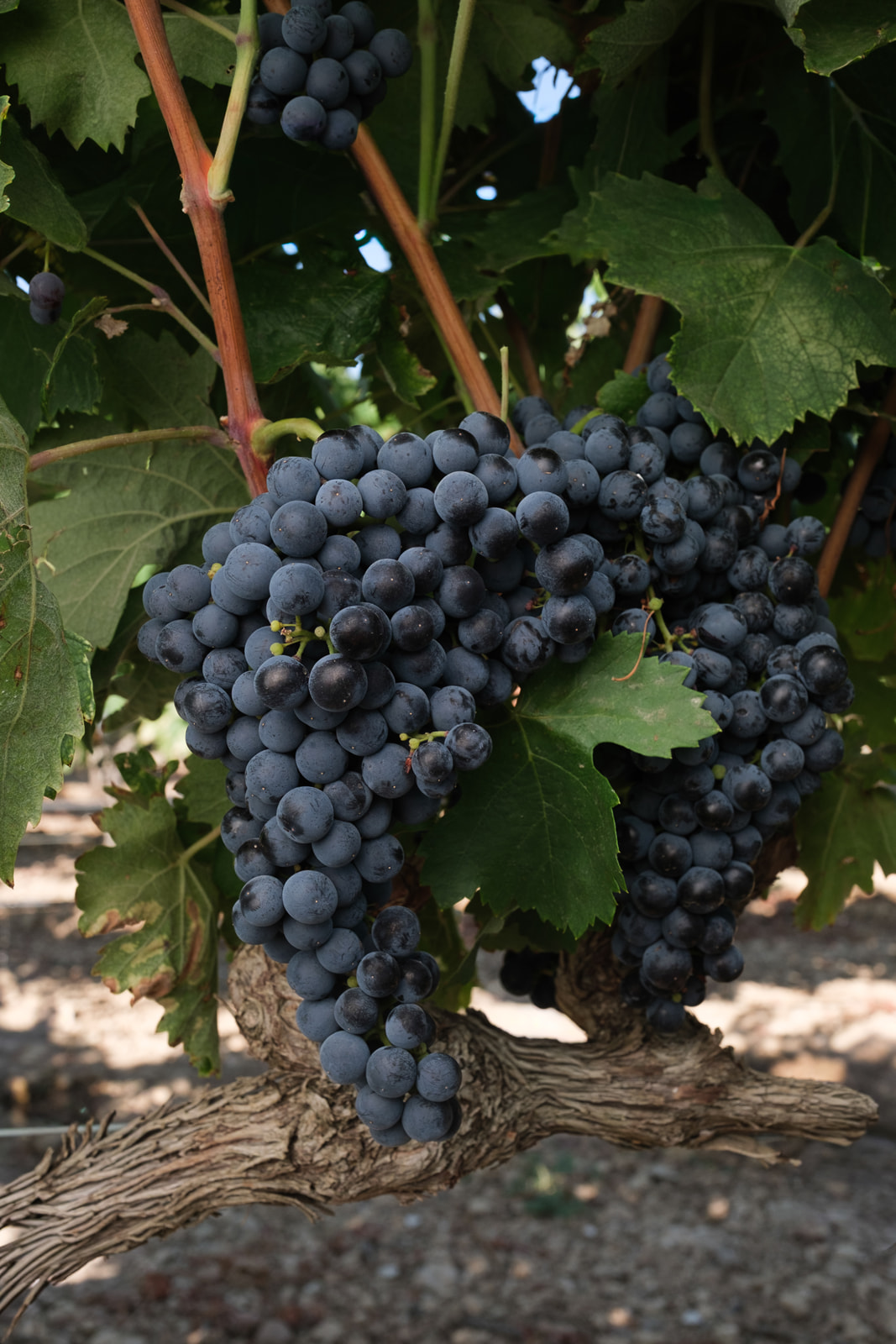
In the last decades it has become the main Spanish red variety and an ambassador of our wines in the world. It is cultivated in most of the Spanish producing regions and in other countries such as Portugal, the United States, Australia, Argentina, etc. It has a multitude of names (or synonyms): Tinta Fina, Tinta del País, Valdepeñas, Cencibel, Ull de Llebre, Aragonés, Tinta Roriz... A theory of the prestigious specialist Luis Hidalgo, connects it with the French Burgundy grape Pinot Noir, which could have arrived in Spain, like so many others, through the Camino de Santiago. In Navarra, although its presence is historical, it had a great development in the last two decades, becoming the majority red variety of the D.O. It is present throughout the territory of Navarra, although it is more abundant in Ribera Alta, Ribera Baja and Tierra Estella. In recent years, the Tempranillo variety has been losing prominence while Garnacha continues to gain ground.
Wines made with Tempranillo usually have medium or high intensity colors, are low in acid, but with good body and have aromas reminiscent of blackberries and licorice. They are used both to produce young wines, normally single varietals, and wines for aging, due to their special aptitude for aging and ageing, where they are normally blended with other grapes.
- Medium to late budding.
- Flowering in mid-June.
- Envero at the end of July.
- 2nd period or semi-early ripening.
- Medium to long cycle.
Pests and diseases
- Sensitive to powdery mildew and acariosis.
- Very prone to leaf desiccation in extreme climatic conditions.
Habitat
- Cool climates, some humidity and it is very sensitive to drought (defoliation).
- Soils of medium consistency, not too loose, with good water retention capacity.
- It prefers land well oriented to light and wind, preferring slopes to low land or watercourses.
- Thermal region III-IV.
Cluster
- Medium-large size, medium compactness, long, hanging, elongated cylindrical-conical shape with prominent shoulders.
- The average weight is 270 gr/bunch.
- Medium to large grains, round, intense bluish-black color, somewhat waxy and thick skin.
Production
- Average to good to fair all years.
Cabernet-Sauvignon
A red grape variety of French origin, from the Bordeaux region, and undoubtedly the most international of the wine grapes, as it can now be found in all wine-producing countries of the world.
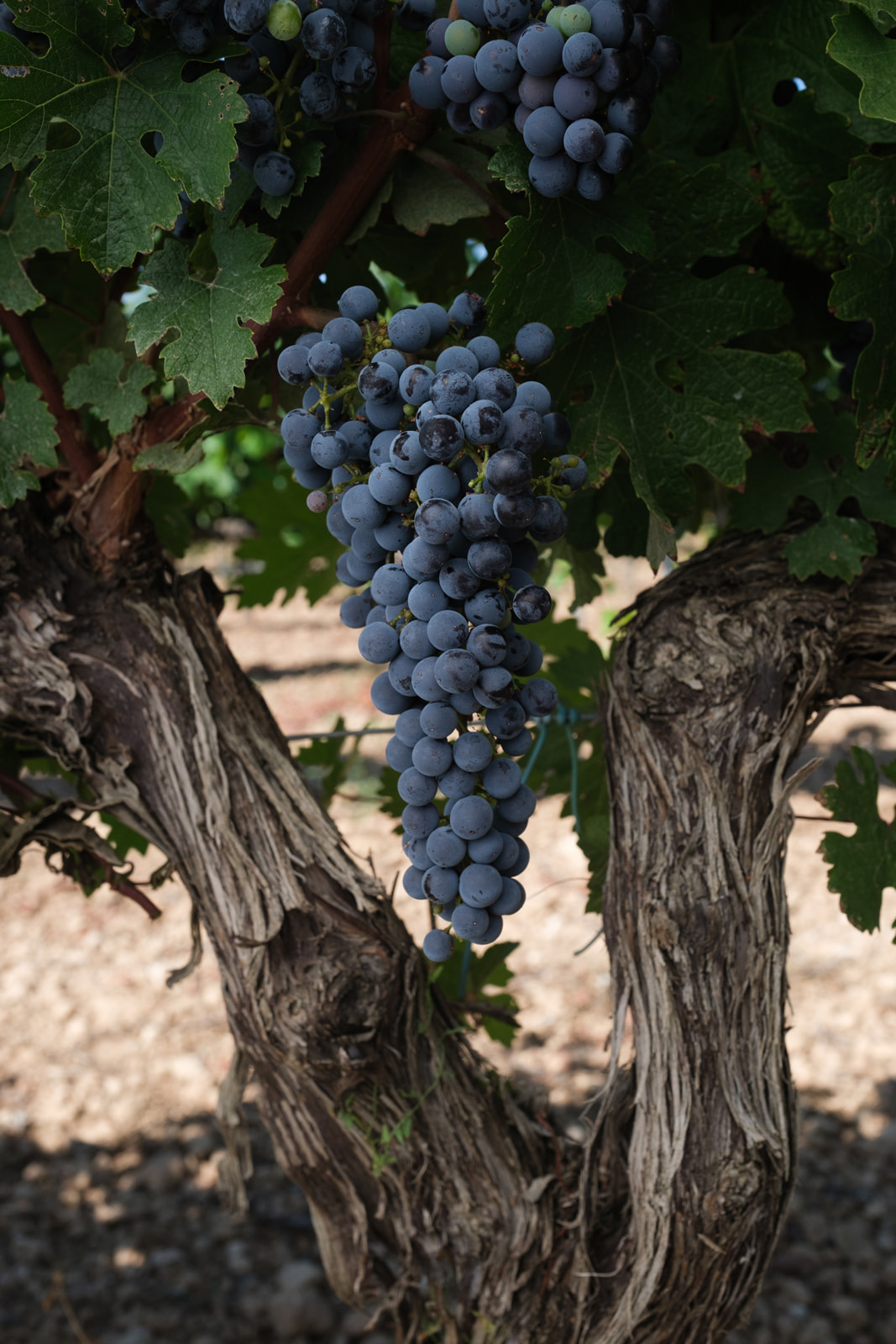
It was introduced in Navarra at the end of the 80's and currently represents more than 10% of the total surface of the Denomination of Origin. Present in all subzones, it is more abundant in the Ribera Alta and Ribera Baja.
The main characteristic of this grape is its high content of polyphenols, coloring matters and tannins, which allow the production of wines of very intense color and full-bodied, in addition to its good acidity. It is highly appreciated for the production of wines for aging, which are usually matured in barrels, and as an indispensable complement in "coupages" (blending wines of different varieties). It is important that it is harvested at optimum maturity, otherwise it can produce vegetal flavors, bitterness and aromas normally typified as "green bell pepper".
- Late budding.
- Flowering second half of June.
- Envero in mid-August.
- Ripening of 3rd season in early October.
- Semi-long cycle.
Pests and diseases
- Some hardiness, being not very sensitive to mildew and excoriosis.
- Resistant to botrytis due to the hardness and thickness of the cuticle of its grains.
- Sensitive to powdery mildew.
Habitat
- Variety that, due to its hardiness, adapts to different climatic conditions.
- Soils of medium consistency, with good water retention capacity, deep and fresh.
- Thermal region II-III.
- Some wind resistance.
- Small, elongated and cylindro-conical with an average weight of 125gr/cluster.
- Small grain, black, hard and thick skin.
Production
- It is advisable to grow it on a trellis.
- Average and regular production every year.
Merlot
Red variety of French origin, from the Bordeaux region and especially from Saint Emilion, faithful companion and complement to Cabernet Sauvignon Blanc.
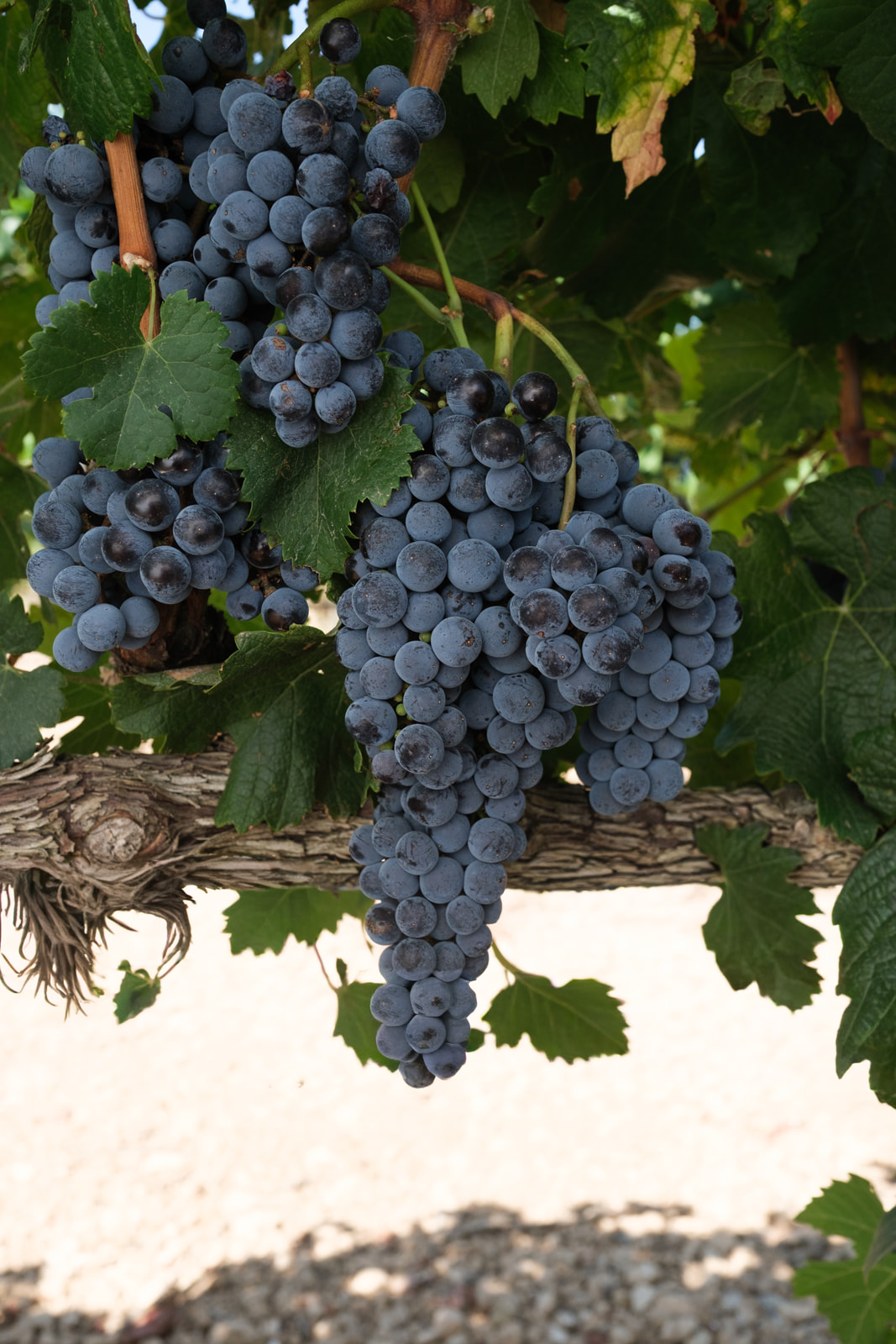
This grape has been exported to countries such as the United States, Chile, Italy and Eastern Europe, but has not been as widespread as others due to its cultivation difficulties. In Navarra it was introduced in the mid 80's, and nowadays it reaches a rate of more than 12% of the vineyard. It ranks third in importance in the region. Its presence is general throughout the territory of the D.O. Navarra, although the Riberas Alta and Baja stand out as areas of influence.
It is a grape that gives wines intense fruity aromas and high quality, with good acidity and body, where the tannins are abundant but soft. It is used for both young and aged wines and alone or accompanied. Together with Tempranillo and Cabernet it makes up a modern and daring "coupage" very common in Navarran wines. There are also magnificent examples of single-varietal aged wines made with Merlot.
- Early sprouting (frost problem).
- Flowering first decade of June.
- Early August.
- 1st period or early ripening.
- Sensitive to overripening.
- Short cycle.
Pests and diseases
- Sensitive to mildew.
- Not very sensitive to powdery mildew.
Habitat
- Temperate climate with a certain humidity.
- Very sensitive to drought (very small grains) and high summer heat.
- Fresh and fertile land.
- Thermal zone II-III.
- Sensitive to wind breakage.
- Medium size, elongated, conical, winged and loose.
- With an average weight of 160gr/bunch.
- Small grain, spherical, strong black color and thick skin.
Production
- Average yields but irregular due to the problems of its sensitivity to shifting.
Syrah
A red variety believed to have originated in the Near East, specifically Iran, although in its contemporary version it comes from France and mainly from the upper Rhone region.
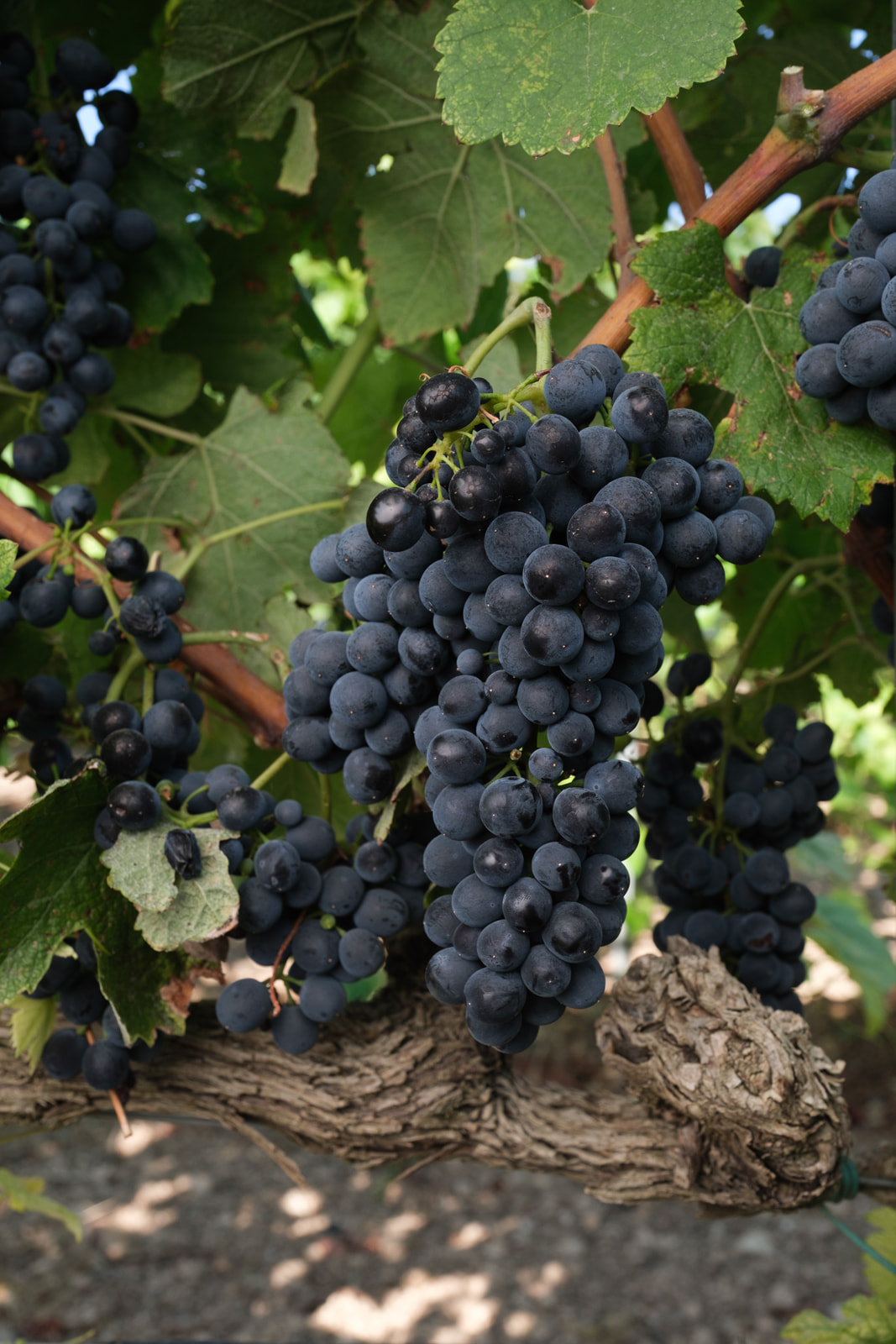
A grape that has experienced a real fashion in recent decades and is grown in countless countries, among which Australia occupies a special place having made Shiraz, the Anglo-Saxon way of spelling it, its main hallmark. In Navarra it was authorized in 2008.
Wines made with Syrah stand out for their intense color, great body and fruity and spicy aromas. A variety that gives very good results in aged wines, with barrel aging, and that also expresses itself well in young wines. It can be made alone or accompanied and is a very good complement to Garnacha.
- Budding should be considered average, between Garnacha and Tempranillo with high fertility indexes (2-3 clusters per shoot).
- Sensitive to bud breakage by wind from bud break to flowering.
- Creeping habit and high vegetative development.
- Flowering in early June.
- Veraison occurs in the first ten days of August.
- Very short ripening cycle and rapid ripening, with a tendency to overripen.
Pests and diseases
- High sensitivity to chlorosis.
- Low sensitivity to powdery mildew.
- Sensitive to mites and botrytis at the end of ripening.
Habitat
- It adapts to diverse climatic situations in healthy soils with good quality.
- The precocity of its maturation allows its correct adaptation to cool and late areas.
- Medium-large size, hanging, cylindrical and with wings (weight of 200gr/bunch).
- Its berries are elliptical with a characteristic violet-bluish color.
Production
- High production.
- It picks up sugar easily and maintains high total acidity values.
Graciano
Red variety, originally from La Rioja and Navarra, which is attracting new interest from quality producers in different Spanish regions.
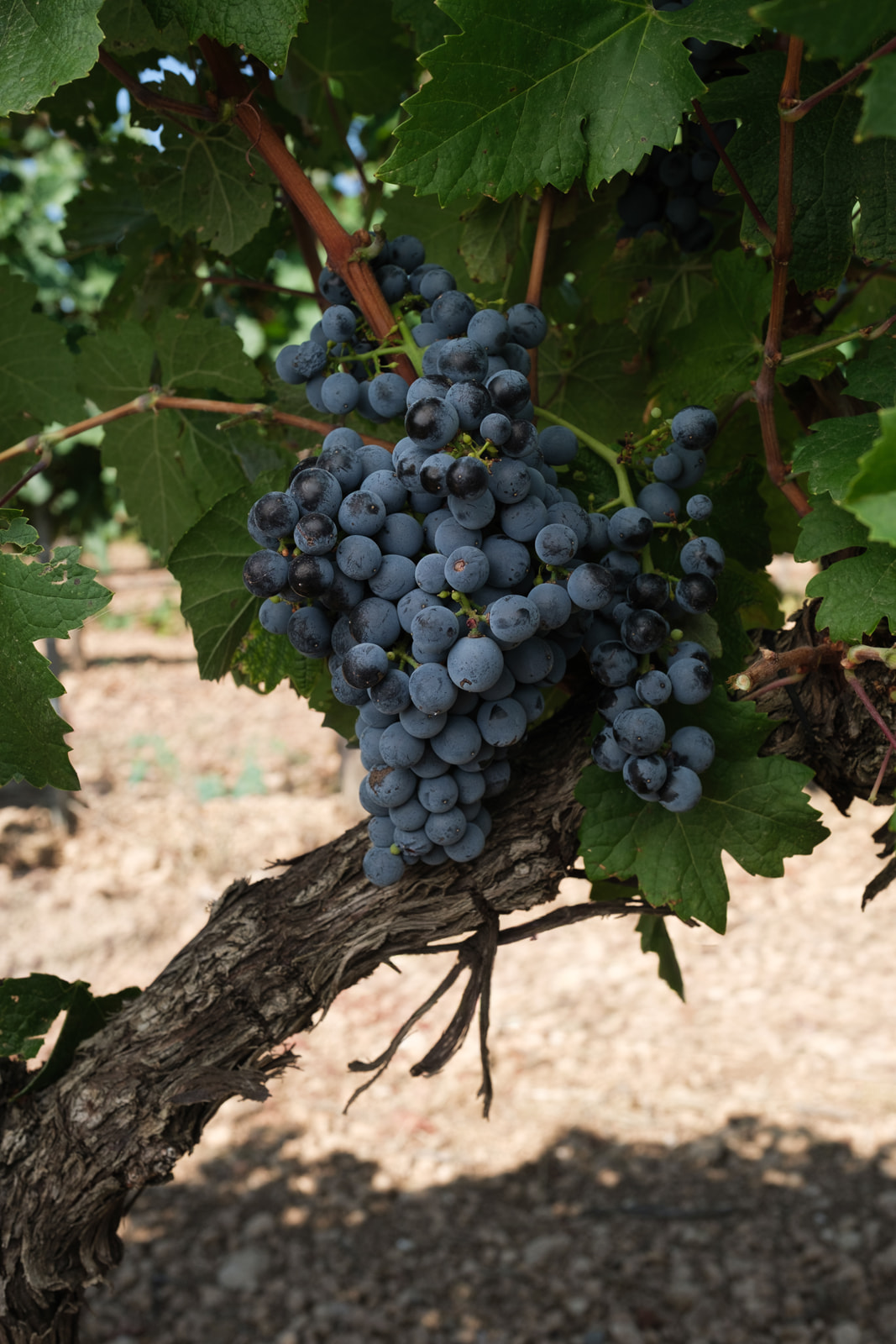
In spite of its excellence for blends, there are few vineyards within the Spanish varietal framework, being concentrated in La Rioja and Navarra. Its implantation in Navarra is historical although it has always represented a very small area, about 2% of the vineyard, being mainly implanted in the Riberas Alta and Baja.
The wines have very intense colors, due to the high concentration of coloring matter, high acidity and full-bodied (abundant tannin). It is necessary to have the right climatic conditions for optimum ripening, a situation that usually occurs in large vintages. It is usually used to complement other varieties (in "coupages") although it can also be used to make single-varietal wines. In Navarra there are examples of both young and aged wines of great quality obtained only from Graciano.
- Late budding.
- Flowering at the end of June.
- Veraison in the last ten days of August.
- Very late ripening.
- Long cycle.
Pests and diseases
- Very rustic.
- Susceptible to downy mildew and late botrytis.
Habitat
- Very small cultivation area.
- It desires mild climates.
- Cool, calcareous clayey soils.
- Very sensitive to drought.
- Difficult to adapt, in adverse climates it easily defoliates at the end of the cycle.
- Thermal region II-III.
- Medium to large size, compact, slightly pendulous, short shoulders.
- Average weight about 280 gr/bunch.
- Medium grain, intense black color, waxy and medium consistency of the skin.
Production
- Average production
Mazuelo
It is also called "mazuela", "cariñena" or "carignan". It is a Spanish variety that is considered to be native to the area of Navarra and La Rioja, with traditional presence in Catalonia, southeastern France and recently introduced in other countries such as Australia and the United States.
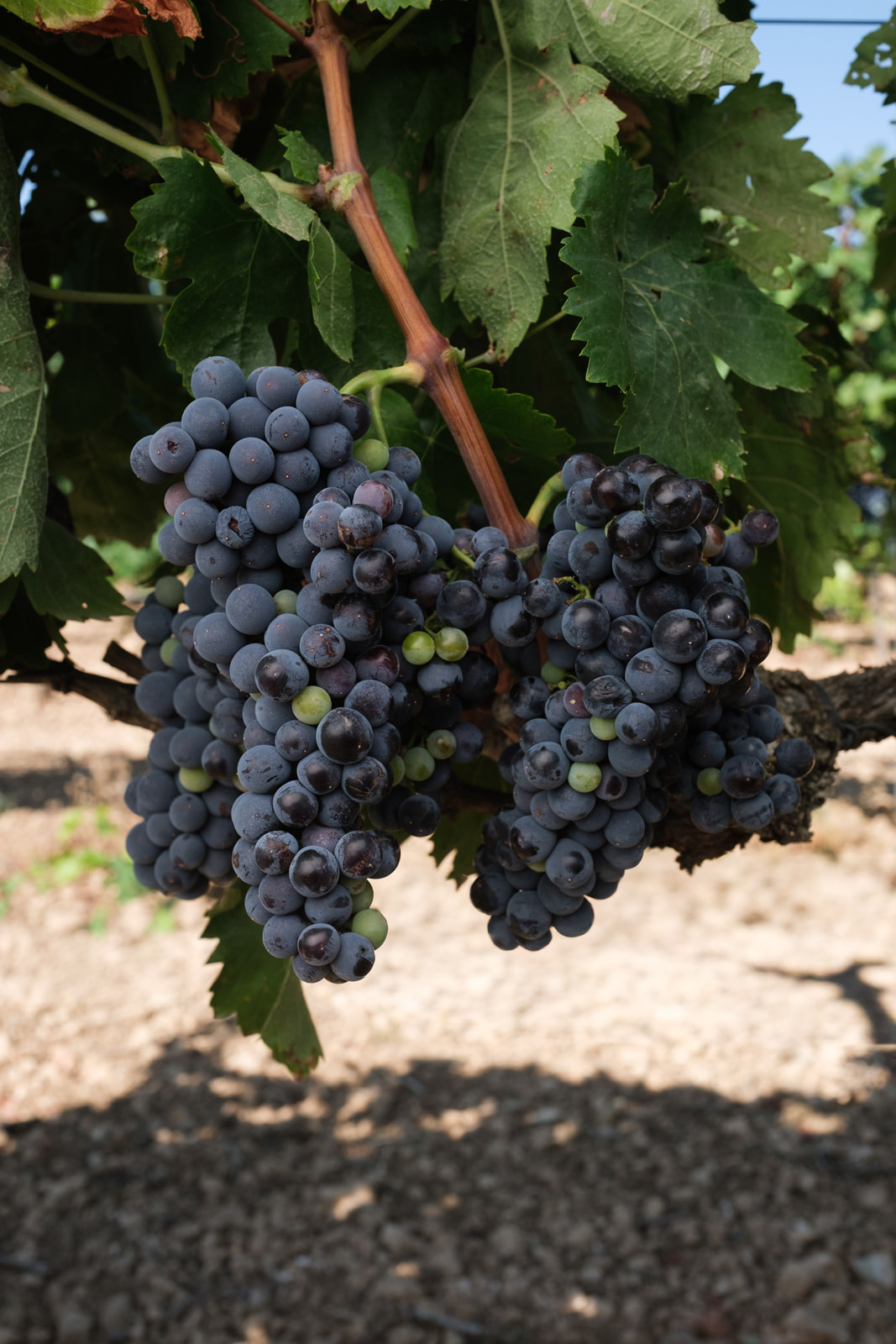
In Navarra it has always been under-represented, occupying less than 1% of the vineyard, and is located mainly in the Ribera Baja.
It produces wines with a not very intense color, fruity, high acidity and medium body. It is usually used in blended wines to provide freshness (acidity), although there are some very interesting single-varietal aged wines.
- Late budding.
- Flowering end of June.
- Veraison end of August.
- Very late ripening.
- Long cycle.
Pests and diseases
- Very sensitive to powdery mildew.
- Sensitive to botrytis and acid rot.
Habitat
- Dry, mild and hot climates (requires high number of sunshine hours).
- It is not very demanding in soils, unless they are deep.
- Thermal region IV-V.
- Good resistance to wind and drought.
- Dry, mild and hot climates (requires high number of sunshine hours).
- It is not very demanding in soils, unless they are deep.
- Thermal region IV-V.
- Good resistance to wind and drought.
Production
- Very productive and regular every year
Pinot Noir
It is a red variety of French origin, from the Burgundy region, which is present in other countries such as Italy, Switzerland, New Zealand and the United States, although it has not been internationalized as much as others due to its difficult cultivation and special sensitivity to climatic conditions.
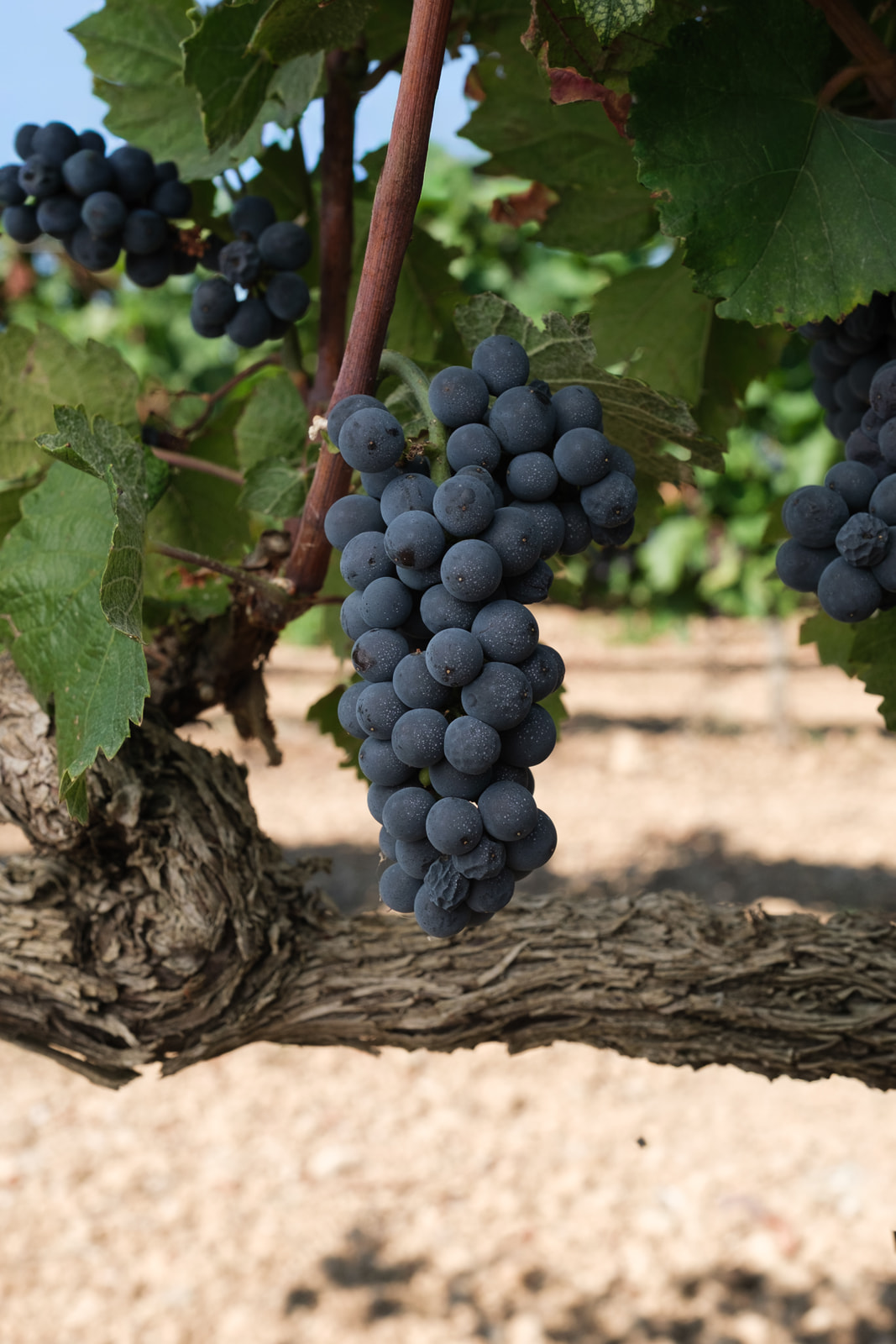
In Navarra, it was authorized in 2008. Due to its northern character, its adaptation is ideal in cooler areas such as Tierra Estella, Baja Montaña and Valdizarbe.
Pinot Noir produces delicate wines, normally with low color intensity, good acidity and medium body. It is usually made alone for both young and aged wines, although it is in the latter where the best results are obtained. It is important to know that in Champagne it is used "in white", that is to say, to obtain a white base wine with which the famous local sparkling wines are produced.
- Bud break should be considered early, flowering early and veraison medium.
- The ripening period is very short, especially in warm areas.
Pests and diseases
- Very low resistance to powdery mildew and low to botrytis.
Habitat
- It requires a cool climate to achieve good results.
- It is a variety that is difficult to adapt to certain areas.
- It produces very small bunches, around 153 grams per bunch, which are extremely compact and have a very short stalk.
- The cluster is small, compact, cylindrical, usually with a very evident wing, short and thick peduncle.
- Its berries are small, purplish black, with fine skin and soft pulp.
- Its compactness makes it very sensitive to botrytis during ripening.
Production
- The productive yield should be considered as low.
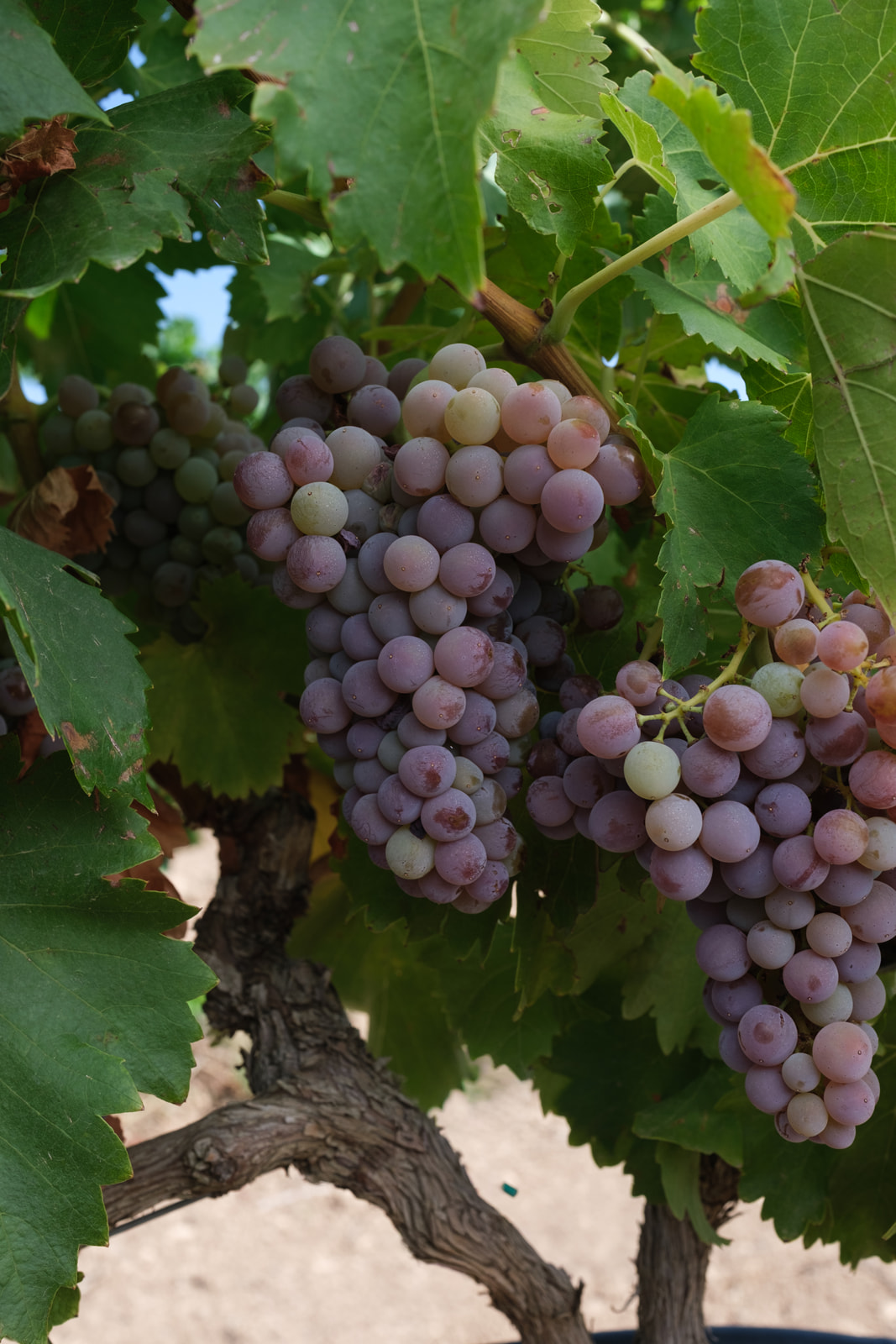
Grenache Roya
Chardonnay
White grape variety of Burgundian origin (France) and the most international of the white grapes. It is cultivated in all the producing countries of the world due to its high quality and adaptability.
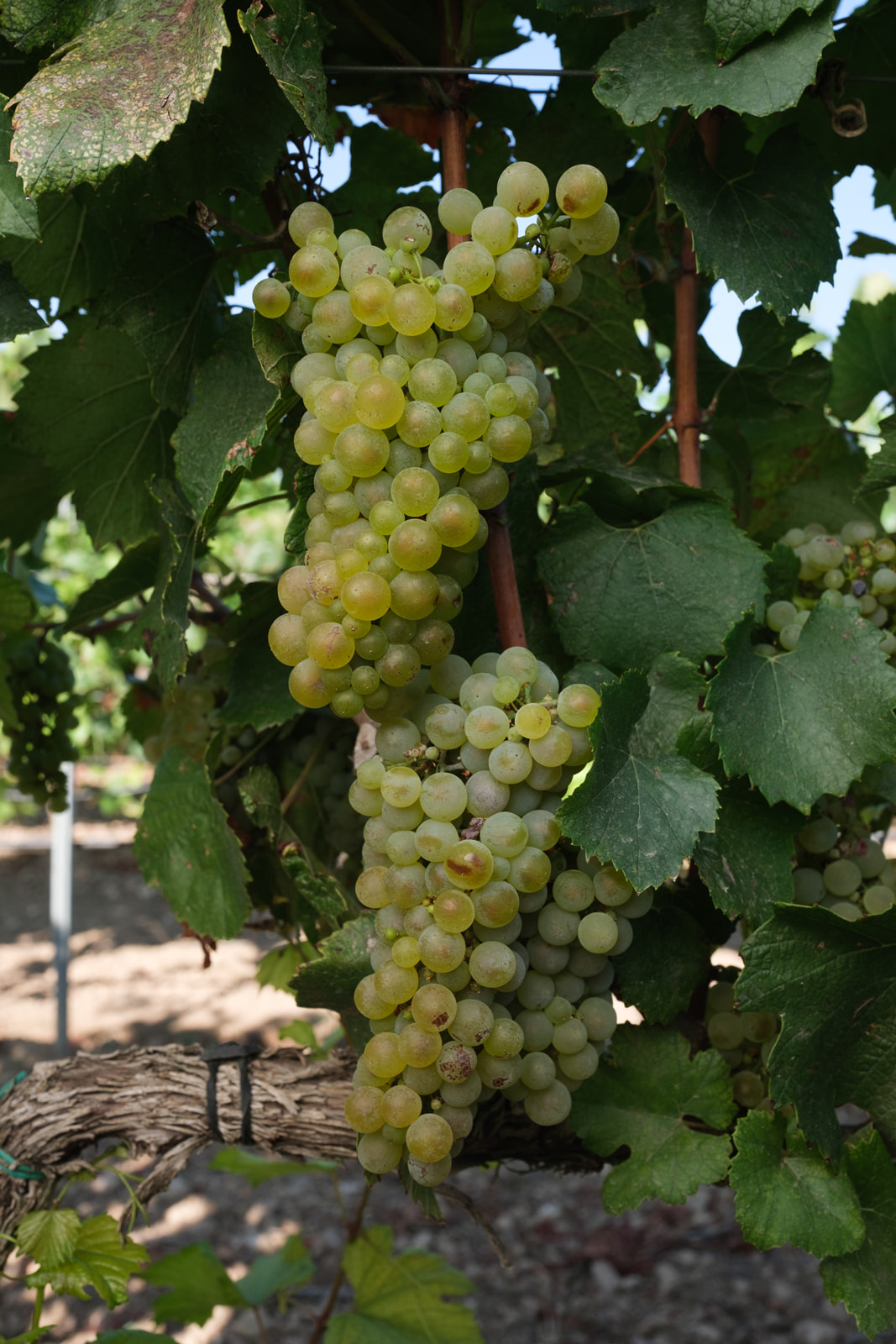
In Navarra, its introduction dates back to the 1980s and in just two decades it has become the dominant white variety in the region and the hallmark of Navarrese white wine. It occupies about 6% of the vineyard surface, with more than 600 hectares, located in Ribera Alta and Baja, Valdizarbe and Tierra Estella.
A grape of great character that produces wines with good acidity, body and volume, where the aromas are usually reminiscent of citrus (sometimes tropical fruits), hay and honey. Because of its great class, it is always used alone to make young wines or wines for cellaring: its wines are very suitable for barrel aging and aging.
- Very early budding, very sensitive to frost.
- Flowering in early June.
- Very early ripening.
- Sensitive to overripening.
- Short cycle.
Pests and diseases
- Very sensitive to botrytis.
- Susceptible to powdery mildew and codling moth.
Habitat
- Mild, cool and somewhat humid climates.
- Sensitivity to drought.
- Climate Zone I and II.
- Prefers fertile soils
- Small size, cylindrical shape with one or two lateral wings.
- They are compact and short stalk, with a weight of 150gr/bunch.
- Small and spherical grains of a golden yellow color when ripe. Shiny and strong skin.
Production
- Average production.
Viura
White variety of Spanish origin that in other producing areas is known by the name of "macabeo". Very widespread in Catalonia, La Mancha and Rioja, although it is present in most of the Spanish production areas. It is also found in the French Languedoc Roussillon where it is called "maccabeu".
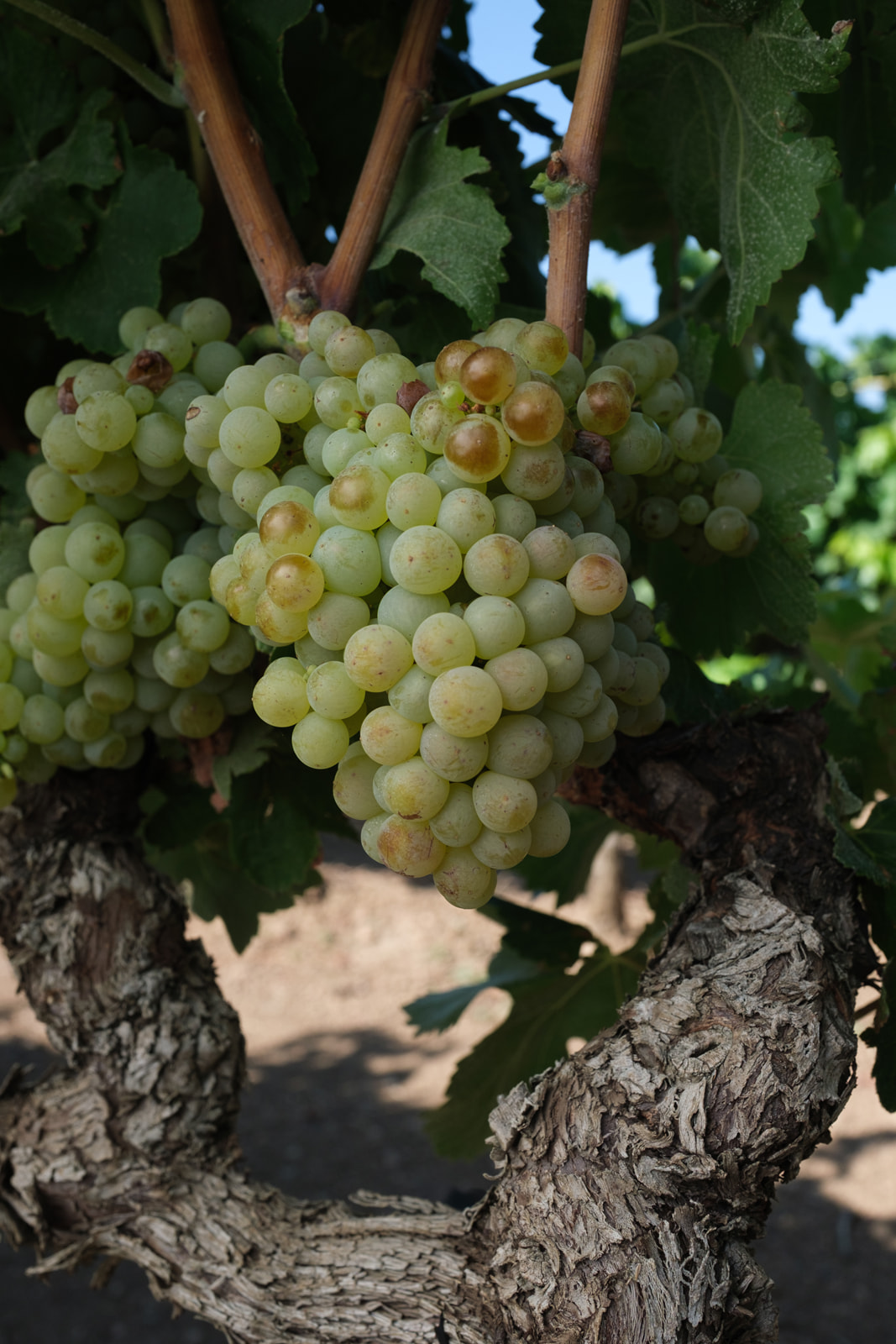
In Navarra it is a traditional variety of ancient implantation, which suffered a significant decline with the introduction of new varieties from the 80's onwards. It currently represents about 3% of the total vineyard of the D.O. and is mainly located in Ribera Alta and Ribera Baja.
It produces wines that are usually intended for quick consumption. By controlling vineyard production and careful winemaking, interesting wines can be obtained. It is increasingly used in combination with the Chardonnay grape. Wines made from this variety are not usually fermented or aged in wood.
- Semi-late budding.
- Flowering in early June.
- Ripening second season, mid-September.
- Medium cycle.
Pests and diseases
- Very sensitive to botrytis.
- Susceptible to powdery mildew, grapevine moth and spider mites.
Habitat
- Mild, cool climates.
- Well ventilated areas.
- Climate Zone II and III.
- Very large, hanging and compact size.
- Weight of 350gr/bunch.
- Round grain and of good thickness.
- Of a golden yellow color with a waxy sheen.
- Thin skin.
Production
- Very productive and regular every year.
Sauvignon Blanc
White variety of French origin, probably from Bordeaux, although it is also traditionally planted in the upper Loire area (Sancerre and Pouilly Fumé).
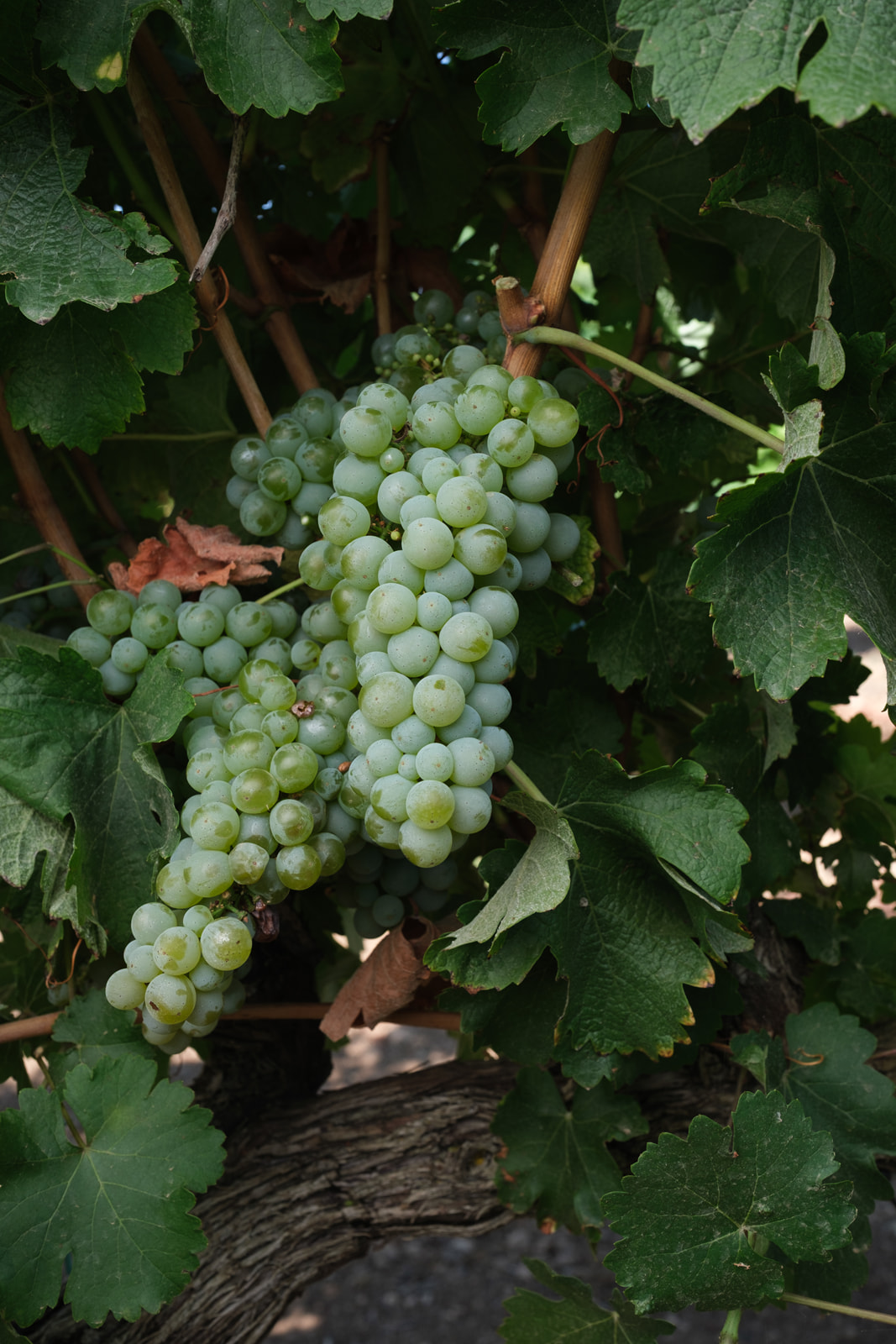
One of the great white grapes that has been exported to countless countries (New Zealand, Chile,...) and is present in many Spanish producing areas.
It is used in the production of young or barrel-fermented wines. It stands out for its pale color, good acidity and aromatic power. Depending on its growing area, its aromas can evoke notes of tropical fruits (such as passion fruit) and herbaceous tones (reminiscent of boxwood).
- Bud break should be considered early, about two days after Chardonnay; very high risk of frost.
- Flowering in early June and veraison three days after Chardonnay.
- Vigorous variety, medium fertility.
- The ripening cycle (veraison-harvest) is very short with very early technological ripening and a high sensitivity to overripening.
Pests and diseases
- Very low resistance to botrytis.
- As for powdery mildew, resistance is low and mildew high.
- Sensitive to codling moth.
Habitat
- Similar in requirements to Chardonnay, the greater vigor it shows recommends planting in soils that are not very fertile.
- Sensitive to drought.
- It produces small bunches, weighing 174 grams, which are very compact and have a very short stalk.
- The berry is small, golden when ripe and with a typical aromatic flavor.
Production
- Productions are medium-low.
- Long pruning is recommended.
- The must has a medium-high alcohol content with good acidity.
Grenache White
An autochthonous white variety from Aragon, it is present in some Spanish Mediterranean regions and in the South of France.
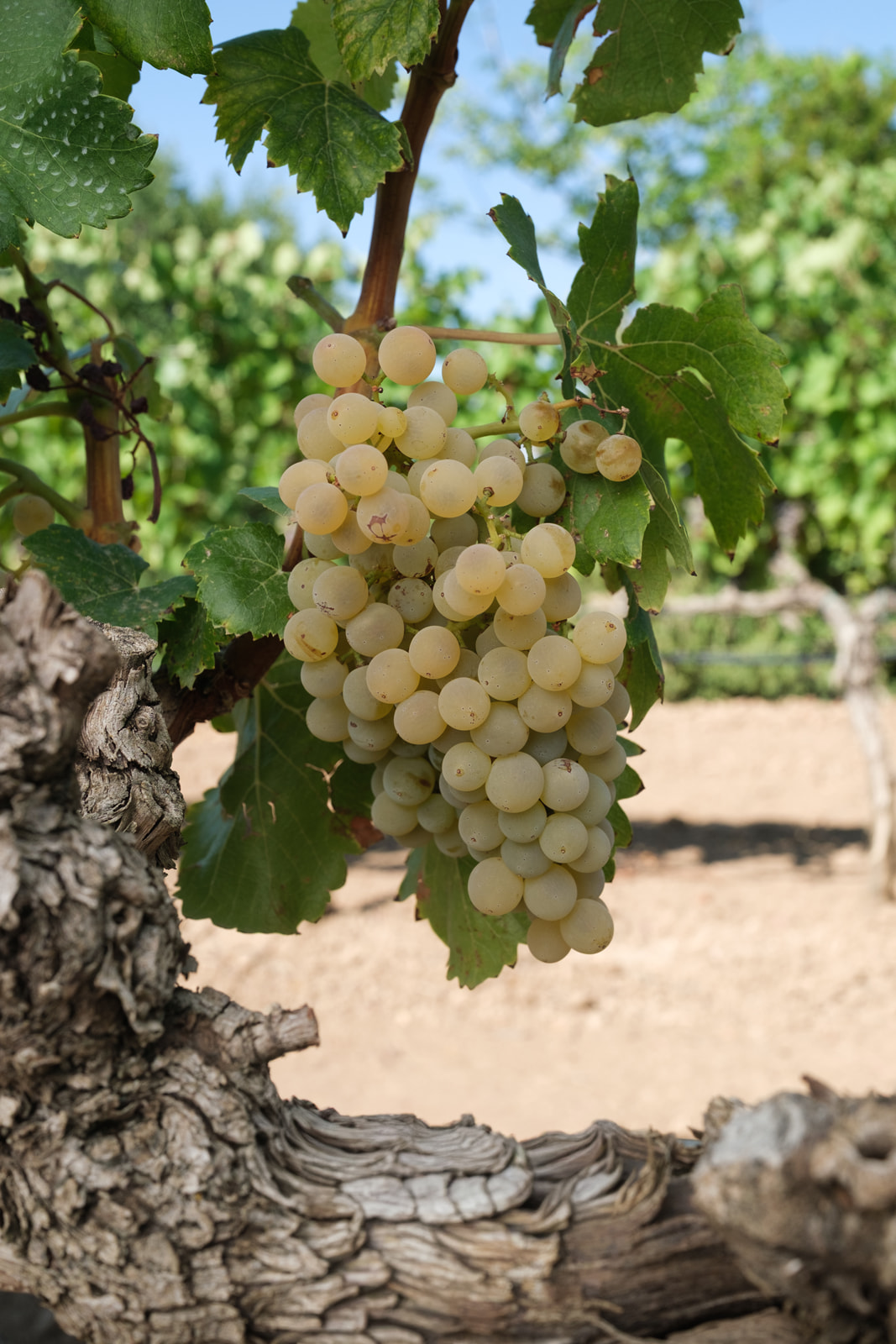
In Navarra, its presence is a minority, occupying about 2% of the vineyard, but the growth in hectares in recent years indicates an upward trend in the cultivation of this variety in Navarra.
Garnacha Blanca wines tend to have a lot of volume, due to its ability to accumulate sugar, low acidity and highly original aromas. In some regions it is used as a complement in "coupage" wines or to make natural sweet wines. In Navarra there are examples of very interesting elaborations of Garnacha Blanca.
- Semi-early budding.
- Flowering first decade of June.
- Enveros mid-August.
- Ripening of the third period, at the beginning of October.
- Semi-long cycle.
Pests and diseases
- Not very sensitive to powdery mildew.
- Sensitive to mildew.
- Sensitive to botrytis at flowering and ripening.
Habitat
- Very rustic, adaptable to different climates and soils.
- Best in warm climates and stony soils.
- Thermal region III-IV.
- Some resistance to drought and wind.
- Medium size, about 200gr/bunch.
- Short and compact peduncle.
- Medium grain, round and thin skin.
Production
- Irregular production.
Muscatel de Grano Menudo
White variety of millenary origin, probably from the Middle East. Already in classical antiquity, wines were made from this grape.
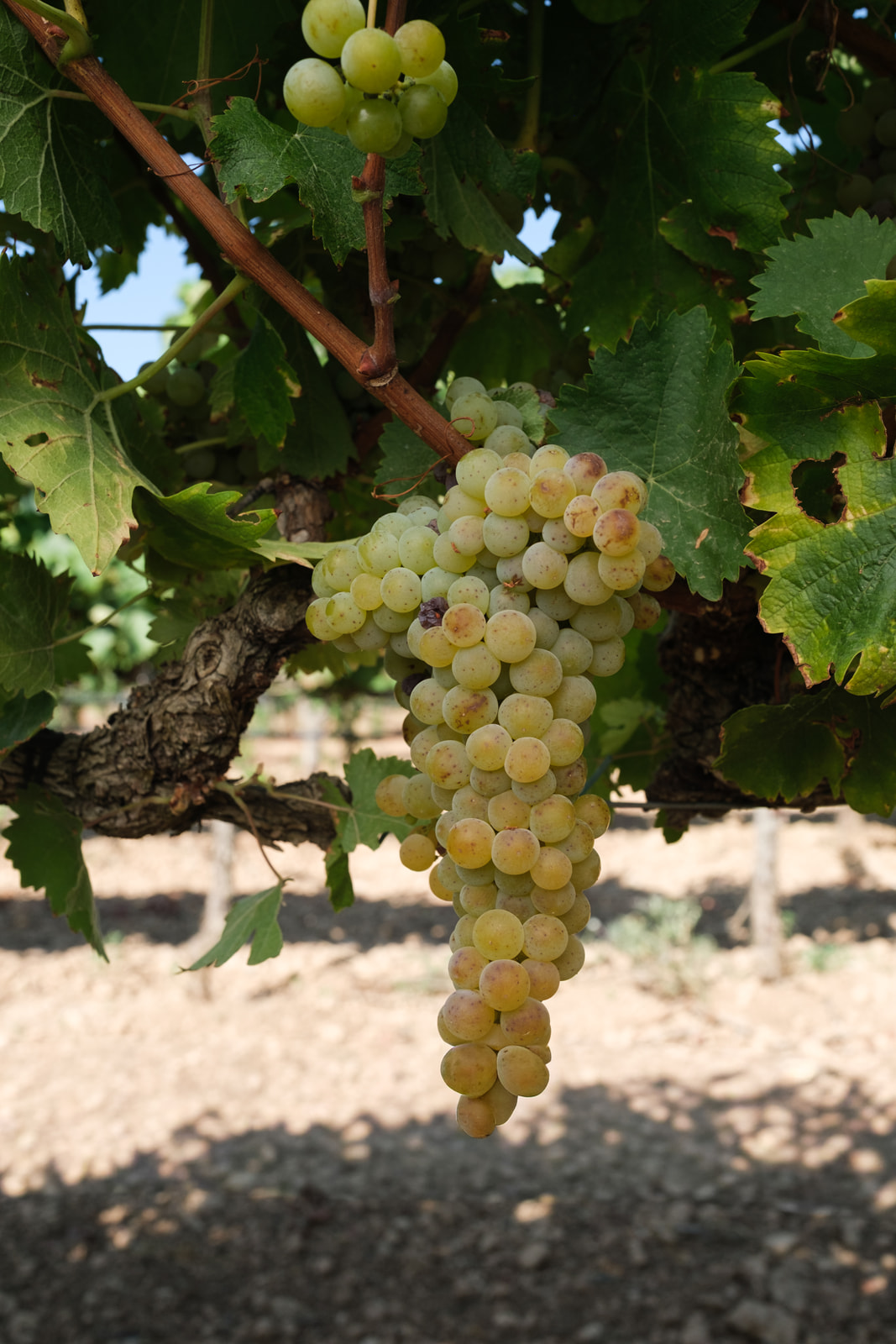
There are different types of Muscat, some of which are used as table grapes, but the one grown in Navarra seems to be more similar to the one grown in the French Languedoc, called Muscat de Frontignan. Its main difference compared to the other types is the small size of the grape berries. Although its presence in Navarra is historical, its recovery dates back to the 1980s thanks to studies promoted by the Estación de Viticultura y Enología de Navarra (EVENA). At present, it represents almost 1% of the total surface area of the D.O., being present in most of the zones, although predominantly in Ribera Baja.
Moscatel grapes are mainly used to make sweet or semi-sweet single-varietal wines. Some of these are considered liqueur wines, since they are obtained by blending wines and/or musts with alcohol, in order to maintain the dominant sweet taste. Wines that stand out for their great aromatic power, with very characteristic aromas that evoke flowers and fruits. Recently it is also being used for the production of dry wines in general in combination with other grapes such as Chardonnay or Viura.
- Early budding, sensitive to frost.
- Flowering in early June.
- Semi-early ripening.
- Sensitive to overripening.
- Short cycle.
Pests and diseases
- Very sensitive to botrytis.
- Susceptible to powdery mildew and acid rot.
Habitat
- Warm climates with abundant hours of sunshine.
- Ventilated land.
- Climate Zone III and IV.
- Medium size, elongated, cylindrical and with two wings.
- They are compact, with a weight of 260gr/bunch.
- Medium and spherical grain.
- Golden yellow color.
- Thin skin.
Production
- Medium-high production.
Malvasia
Malvasía is a variety with a long tradition in Spain, especially in Navarra and La Rioja, although it should not be confused with Malvasía from the Canary Islands, also very old, but with different characteristics.
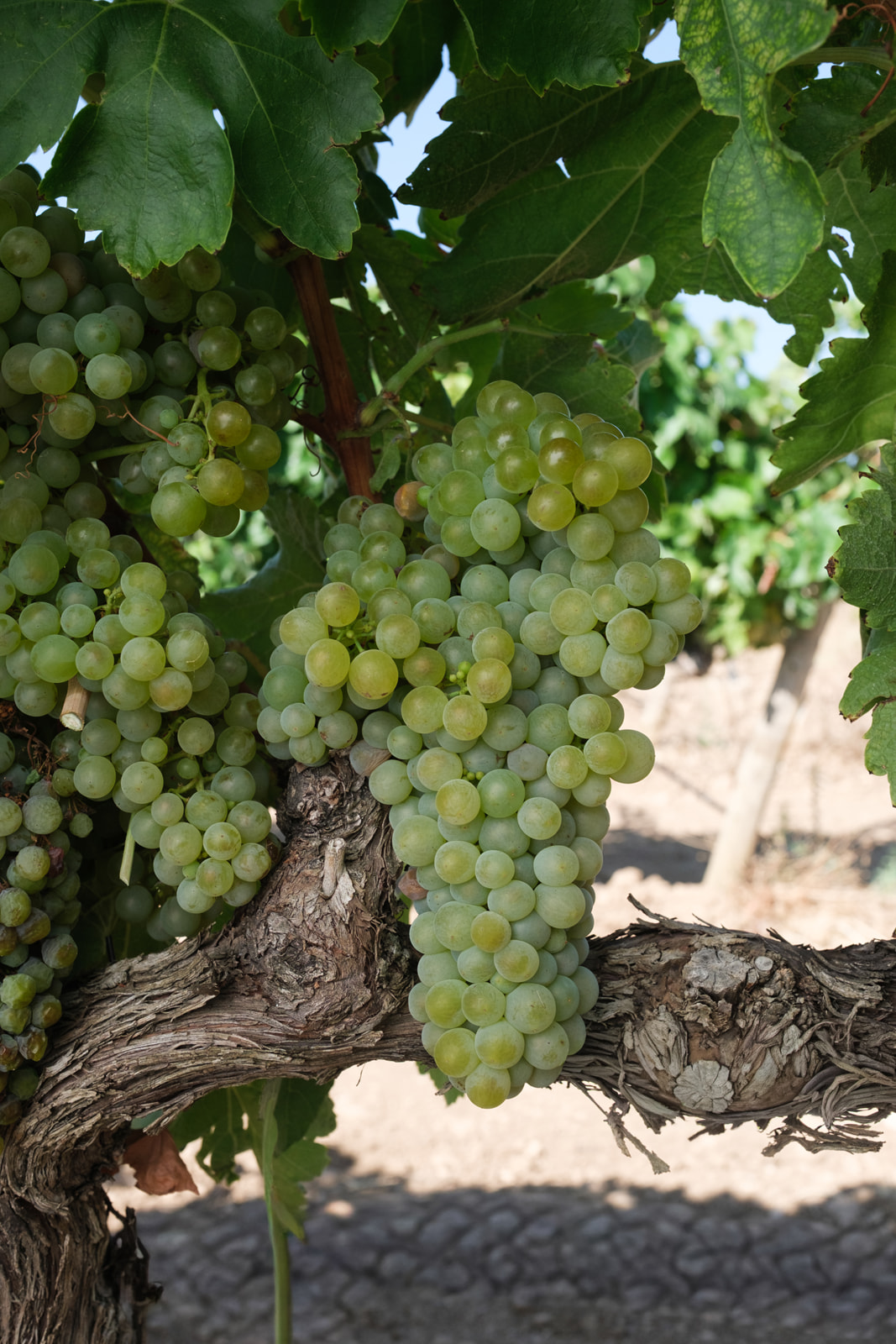
It is also known as "blanca roja", "blanquirroja", "tobía", "suavidad", "suvirat" and "rojal". Its presence in Navarra is very low, barely a dozen hectares, and is concentrated in the area of Tierra Estella.
It is mainly used in the production of young white wines, alone or in "assemblages", which are more aromatic.
- Semi-late budding.
- Flowering in early June.
- Ripening third season, early October.
- Medium cycle.
Pests and diseases
- Sensitive to botrytis.
Habitat
- Rustic variety that adapts well to dry climates.
- Climate Zone IV and V.
- Not very demanding in soil.
- Very large size, pendulous, elongated, with not very pronounced wings.
- Weight of 340gr/bunch.
- Round grain and of good thickness.
- Typical reddish color and brownish freckles on the surface when ripe.
- Berry skin with good consistency.
Production
- Very productive and regular every year.
Oneca
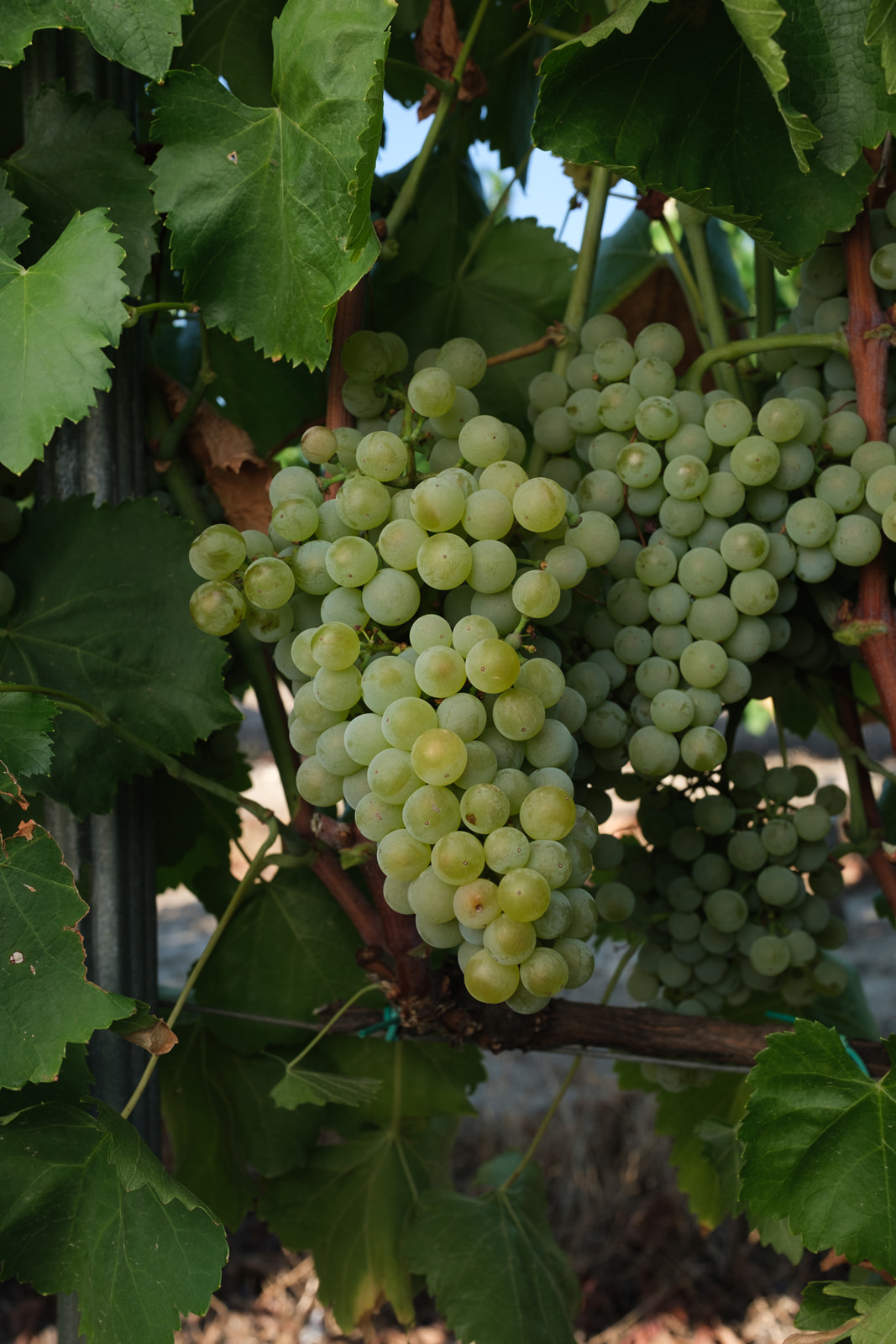
Oneca is a unique ancient white grape variety that has been recovered. It is the first of the unknown varieties submitted from Navarre and the first of the varieties from the Evena conservatory to achieve recognition as a commercial variety.
The Oneca variety became part of the protected varieties of the D.O. Navarra in April 2024. Thanks to the work of the Viticulture and Enology Section (EVENA), it has been possible to recover for the present a unique variety, on the verge of extinction, which represents our winegrowing past and provides clues about ancestral winemaking. This new Vitis vinifera variety has been rescued under the umbrella of EVENA's viticultural material collection project, “Cepas Singulares de Navarra-Vinos Old-Vidaos” (Unique Vines of Navarra-Old-Vidaos Wines).
The rescue of this variety dates back to 2008, during the course of collection work for Garnacha Blanca vines. In this endeavor, several vines were marked in a vineyard over 70 years old located in the Valdecularin area of the municipality of Bargota, owned by the Navarrese farmer Hipólito García Vicente. The white coloration of the berries and the fact that a large percentage of the existing vines in the vineyard were Garnacha Tinta led the winegrower to initially confuse this variety with Garnacha Blanca. In the viticultural registry of the Government of Navarra, it is recorded that the planting was carried out in 1940 by the García Vicente family, unaware that among their Garnacha vines they were cultivating a viticultural rarity that, fortunately, was able to be collected before its uprooting took place in 2010.
Antiquity
Both results regarding its geographical location, as well as kinship data that identify it as the parent of other varieties, allow us to affirm that a variety on the verge of extinction has been successfully recovered for the present day, representing our winemaking past and providing clues about ancestral viticulture in the geographical area of the Alto Ebro wine region. This is plant material whose name we do not know with certainty and which has had to be given a designation.
Oneca was the mother of Íñigo Arista, considered the first king of Pamplona, the embryo and genesis of what would later become the Kingdom of Navarre. It is an extremely ancient local name used as a proper given name with no meaning outside the immediate Navarrese environment, rooted above all in the central and eastern areas of the Foral Community and which, historically, takes us back to the Arista dynasty of the nascent Kingdom of Pamplona.
Likewise, Oneca is the first of the Evena repository varieties to obtain recognition as a variety. Considering these aspects and in order to avoid potential name confusion with other varieties, it was deemed appropriate to use this proper name to designate this varietal.
The name Oneca is of feminine gender and evokes the past, with roots that intertwine with the history of our land, endowing a white grape variety that is undoubtedly singular with nominative originality.
Vegetative cycle
- Bud burst: significantly later than the reference variety, Garnacha Tinta.
– Veraison: very late
- Ripeness: shows temporal coincidence with Tempranillo and is at least 15-20 days earlier than Garnacha Tinta
Pests and diseases
– Hardiness against major biotic agents.
- High tolerance to powdery mildew.
– The low compactness of the cluster favors a certain tolerance to botrytis.
– Average weight
– Medium-low compactness
– Medium berries
 English
  Spanish
  German